A blog about dinghy cruising a Welsford 'Navigator' around the coastal waters of SW England
Arwen's meanderings
Hi everyone and welcome to my dinghy cruising blog about my John Welsford designed 'navigator' named Arwen. Built over three years, Arwen was launched in August 2007. She is a standing lug yawl 14' 6" in length. This blog records our dinghy cruising voyages together around the coastal waters of SW England between 2009 and 2025.
Arwen has an associated YouTube channel so visit www.YouTube.com/c/plymouthwelshboy to find our most recent cruises and click subscribe.
Although 'Arwen' has now been sold to another family and is sailing in new water, this blog will remain a source of inspiration and information for those interested in dinghy cruising and sailing the local waters around Plymouth Sound. So, continue to drop us a comment or ask a question and happy sailing and fair winds to you. Steve and Arwen
Plymouth’s Sutton Harbour is hosting some of the world’s top sailors tonight.
Before they arrived........
The 45th edition of La Solitaire du Figaro arrived around 4pm. A tough race, it is considered to be the world championships for single-handed yachtsmen and women, one of the main training grounds for the famous Vendee Globe.
They will leave on Saturday starting with a 6.30pm race right in front of the hoe, all 40 boats. It's the Americas Cup all over again and thousands will descend on Plymouth Hoe to watch the thrilling spectacle. And I will be there, promise, to bring all the action for you!
In the meantime the boats and crew are getting downtime tonight.
The problems of my hatches on Arwen are keeping me awake so to speak.
Here is my problem.......
the plans I had for Arwen were, I think, first generation ones and showed the hatch to the forward 'under the deck' locker behind the forward bulkhead as being central on the bulkhead
I followed the plans because I was new to boat building........................
and so I didn't spot the problem..................................
which is that the mast is right in front of this hatch and it limits a) hatch removal - making it fiddly and b) it limits what can be put either side of the mast into the hatch size wise
I want to make a new 'more accessible' hatch to one side of the mast so that I can use the under the deck storage locker.......
....which leaves me wondering a) how to seal up the old hatch b) how to cut out and install a new hatch c) whether this will weaken the bulkhead and therefore should be avoided altogether?
To add to my little woes, I have the continued dilemma of the front thwart hatches. These are two round 8" diameter inspection hatches in the vertical bulkhead that forms the front wall of the thwart. They have a tendency to leak....albeit slowly, when the boat is stored on my sloping drive and rainwater manages to permeate the tarpaulins. So I assume that in a capsize and a cockpit full of water, similar leakage through the hatches will take place whilst I am bailing out! So............
can I seal these up in someway by removing the circular plastic hatches and putting ply covers over the holes and epoxying them sealed; followed by repainting?
could I put new better quality 8" round hatches in the seat tops so I can access the storage locker from above
is it worth doing all this fiddling around or should I just leave them as they are.......slow leakers and the locker space filled with 2 litre coke bottles to displace any water that may leak in?
I have managed thus far....but I was just conscious that there was a lot of stuff in Arwen's cockpit that had to be stored and tied down on our recent trip up the river Tamar; 'stuff' that could have usefully been stored away in the lockers available but that inaccessible for above mentioned reasons.............
I enjoyed my amble up the Tamar. It may not have been under sail all the way BUT next time it will be having now got a lie of the land ...and channel.
It felt strange returning to normality. As Arwen and I approached the last meander before arriving at Weir Quay, we became more conscious of 'normality' descending. We were moving from the peace and quiet of rurality to the buzz and 'hyper' business of urban life; from gentle upper tidal riverine life with its reed beds, mud banks and soundtrack of birds, livestock and gurgling river current; to a sound track of trains, cars, factory hums and dockyard clangs.
It felt a melancholy journey back , that last two nautical miles or so from Weir Quay to the two Tamar bridges and as we passed beneath them, I knew our micro adventure was over. The cloak of 'mini explorer' slid from my shoulders to be replaced by the one labelled 'father, husband, teacher, bread winner'. Don't get me wrong I love wearing the latter cloak; an immense privilege resulting in me becoming such a better person than I would have been without wearing it. But, just occasionally, it is nice to take it off, hang it up on a hook, and take off the pegs another cloak, a different one, just for a few days.
I hope I have been able to share with you a sense of the wonder, beauty and privilege it is to live next to the stunning World Heritage Site that is the Tamar Valley.
Alastair Humphreys – Adventurer, author and motivational
speaker – is accredited with devising the concept of a ‘micro Adventure’
A ‘Micro Adventure’ is a simple idea. It is about taking an
opportunity close to home and around us to get out into the wild; to go and
appreciate the beauty close by.A Micro
Adventure has to be invigorating and enjoyable but not expensive – cheap – is the
key word here. It must not require a huge amount of pre planning and preparation;
nor should it require huge amounts of fitness of the part of those
participating in it.
Micro Adventures are about discovering new places in your
own backyard; finding new experiences not tried before or once upon done but
long forgotten.A Micro adventure should
stretch you physically, mentally or culturally. You should push yourself hard
and do the activity adventure to the best of your ability.
Basically a micro adventure is the spirit of a huge big
adventure crammed into a weekend or midweek.
So did my two day jaunt up the Tamar count as a micro
Adventure?
Well I think partially so.I
did go somewhere different and never explored before and it was right on my
back doorstep so to speak.
I did try
something that was mentally challenging – I didn’t know what to expect. It’s
the first time I have navigated Arwen so far up a river. I was getting outside
of my normal comfort zone (big wide open expanses of sea not narrow meandering
channels).
I was certainly enthusiastic
about the adventure; I think it was reasonably ambitious as a first foray into
dinghy cruising in upper river sections; I was certainly very curious to find
out what the area was like, what things I would need to take into account for
when I next go up the Tamar – sailing as far as possible.
Alistair Humphreys gives micro adventure examples as
'climbing a nearby hill'; 'sleeping under the stars in a local wood'; 'jumping into
a river for a wild swim'; 'sleeping out on the moors around a camp fire toasting marshmallows'……..so
does camping under a new self-designed dinghy tent count?
I could have been far more ambitious and ought to have been.
I will be significantly outside my comfort zone, for example, when I don’t
actually spend an overnight at a mooring but rather on an anchor! Steve Early
style so to speak (Log of Spartina) – he is definitely a Micro Adventure man in my
eyes!Just about everyone bar me in the
Dinghy Cruising Association – yep – I think they are all micro adventure men
and women
And yet I may be too hard on myself.One of the aims of a micro adventure is to
get a fresh perspective; time to think; time away from the pressures and constraints
of work and other social expectations. I think my foray up the Tamar allowed me
to do that although, again, I add a caveat that I did mine towards the end of
my week holiday. The real proof of the pudding will be when I go off on Friday
evening and don’t return until Sunday afternoon during a normal
teaching/working week.
Um! I really don’t feel quite brave enough to do that just yet…….what
if I got Arwen stuck on a mudflat and didn’t make it back into school for a
Monday? Ouch…..the social stigma!
So maybe I’m a closeted micro adventurer just beginning to take
baby steps!
“We are defined by our ‘9-to-5’: but what about our ‘5-to-9’?
Some banks
are littered with old wrecks. How heart breaking it is to see old boats abandoned and
neglected. One is an old paddle steamer.
To think fully restored, what a sight that would be making its way up the Tamar,
taking tourists to Cotehele House on the higher tides. Another wreck, if it can
be called that, is the bow section of a hull; upright between support stands…half
finished? Cut in half in some serious marine accident? How random is it?
We follow the course taken by many a fine sailing vessel in the past.
Vessels of 300 tonnes used to sail as far as Morwellham quay just above
Calstock. Coal and fertiliser were bought upstream along with sea sand to
spread on the fields.Limestone was
imported and burned in the numerous limekilns that line the banksides at river
quays such as Haldon and Cotehele.Later, street sweepings and other refuse from Plymouth and Devonport
were carried upstream, another source of manure for the fields along the valley
sides!Later still, large baulks of
timber for pit props along with coal to power the mine pumps were carried up
the river.In the meantime, Bricks, Granite,
Copper, Lead, and manganese ores were exported downstream. Agricultural produce was another major cargo
downstream to the rapidly growing towns of Plymouth, Devonport and Stonehouse.
A
typical Tamar sailing barge was built on the river bank, was up to sixty tonnes
and had a peaked gaff rigged mainsail and a fore staysail.They must have taken some piloting and river
craft on the part of their skippers!In
1820 or 1821 the first paddle steamer on the Tamar inaugurated a service
between Calstock and Devonport to deliver foodstuffs to the Devonport steamer
quays, where it was put on the railway to be taken to London by next
morning.By now it was the early 1800’s.
What a major part in local history has this river played. Sadly, the railway
connections to Tavistock, Calstock and Gunnislake sounded the end of the river
traffic. Minerals were directly shipped out by train. The lucrative tourism
trade continued on the packet steamers from Devonport until around 1939 when
local piers at Plymouth and Devonport were closed and the packet steamers requisitioned
for the war.
As we round
the final part of the first meander, high on the hillside we get our first
glimpse of Pentille Castle amongst the oak trees.
Having refuelled the outboard
at Saltash and Cargreen, I’m now having a mild panic about how much fuel is
left and where can I moor to refuel. I can’t reach the mooring platform at the
bottom on Pentille Quay with its bathing house.
The tide hasn’t reached it yet.
No choice but to push up river and hope that I can get alongside Haldon Quay
for a brief stop. Refuelling in the
centre of the river is not a prospect I look forward to!
At the start of the first big
meander loop the landscape has changed dramatically. The river flows gently, no
waves. The wind has dropped. The current as the tide carries us along is pretty
fast and the outboard is on idle yet we make around four knots.
Past a series
of big yachts moored in the deep water, past old little launch ramps, decayed
and dilapidated; past eroded trees, fallen from the steep hillside banks; the
brown water laps at Arwen’s hull. There is a stillness and calm about the
valley and its river. On a low hill a tractor chugs around an area of hooped
poly tunnels. Ploughed soils are rick loamy dark brown. Herons, suddenly
disturbed by our appearance, take off, skimming low across the brown waters,
the beat of their long wings, steady and rhythmic.
Trains can be heard in the
distance behind us, rumbling across the seven spans of the Tavy iron bridge. A
two car train appears briefly on the hillside, making its way up one of the
most attractive branch lines in the UK, the Tamar Valley Branch line to Calstock.
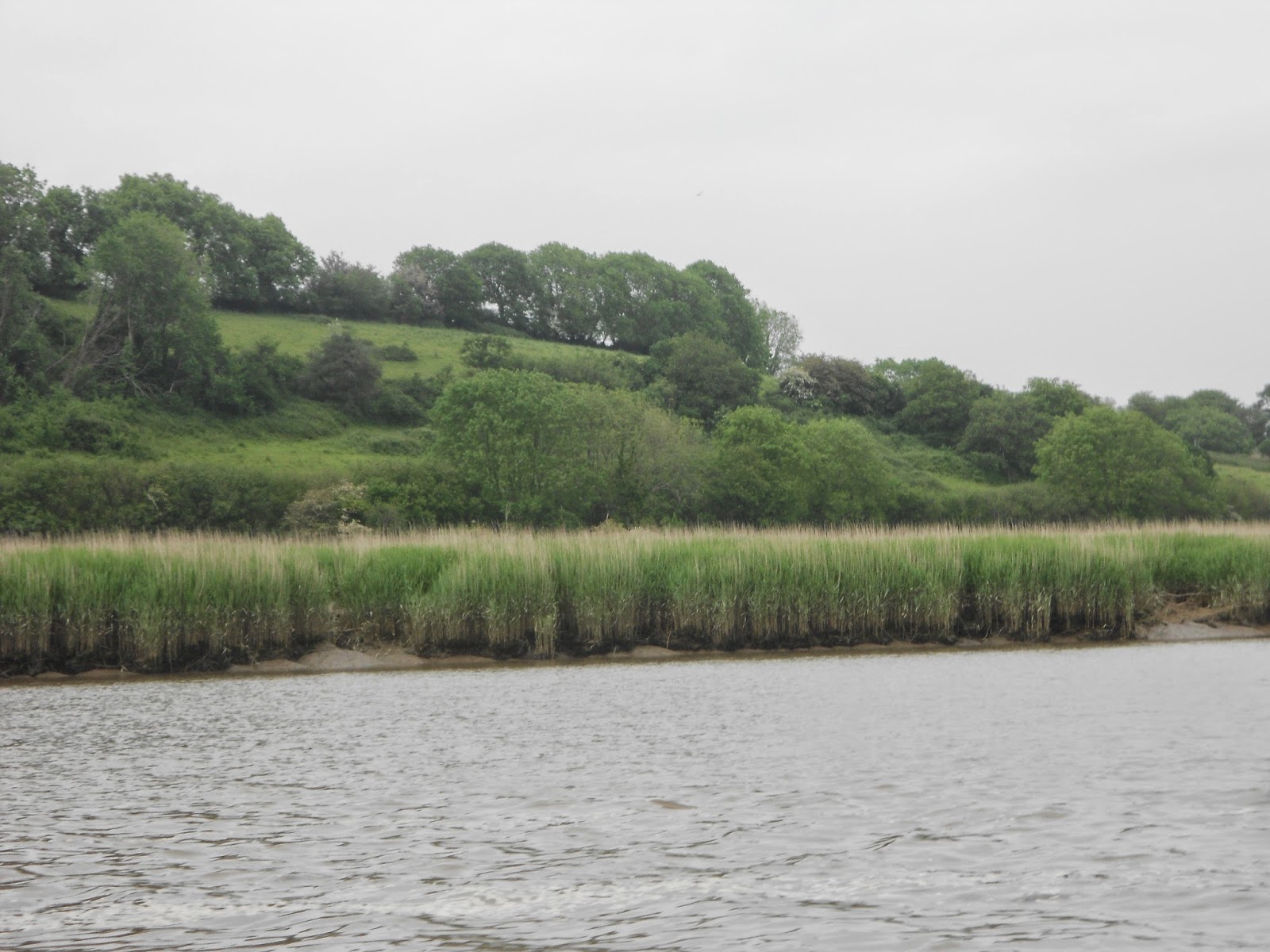
The banks are changing. Flat
expanses of huge reed beds with thick brown oozing mud; they are the home of
wading birds; the snow white egrets, the tall grey herons and occasionally even
the rare and famed Avocets, symbol of the RSPB. The mud flats rise a metre or
so above us. On the inner bank there is an embankment of some sort, overgrown
with marshland plants and reeds. Beyond them lie green fields tinged with
yellow – buttercups blooming. It is glorious, stunning scenery. The Tamar
River and its banks are designated as a Site of Special Scientific Interest, a
European Special Area of Conservation, and an Area of Outstanding Natural
Beauty. One of its special features is the low rocky reefs far inland where
zonation of rocky habitats, both intertidal and subtidal can be observed. Those
very reefs are the ones I keep a wary eye out for. They really do extend inland!
Much of this landscape we pass through is owned by the Cornish Wildlife
Trust. The SSSI status of the valley is due to its unique biodiversity and
varying habitats for waders and wildfowl. Wintering avocets, black tailed
godwits, whimbrels, greenshanks, golden plovers and more…. They are all here
watching us as we make our slow progress up the silent river. As I watch the
trees and reed beds, I’m pretty sure eyes are watching us back!
The channel Thalweg meanders. A
little bit of knowledge about rivers is useful after all! I ferry glide Arwen
from one side of the channel to the other as we follow the Thalweg (a current
that marks the deepest part of the channel). Every so often, a tiny
tributary breaks through the reed beds. A narrow waterway deep into the heart
of the reeds, it is tempting to push up one of them and explore further. But
wisdom takes over, for although it is a rising tide, the tiny channels, barely
the width of Arwen’s beam, are choked with old reeds. What I would need is a
punting pole, for use of the outboard would be impossible. Getting in would be
easy………getting out…….well that could be trickier. I wonder how Arwen would punt
backwards?
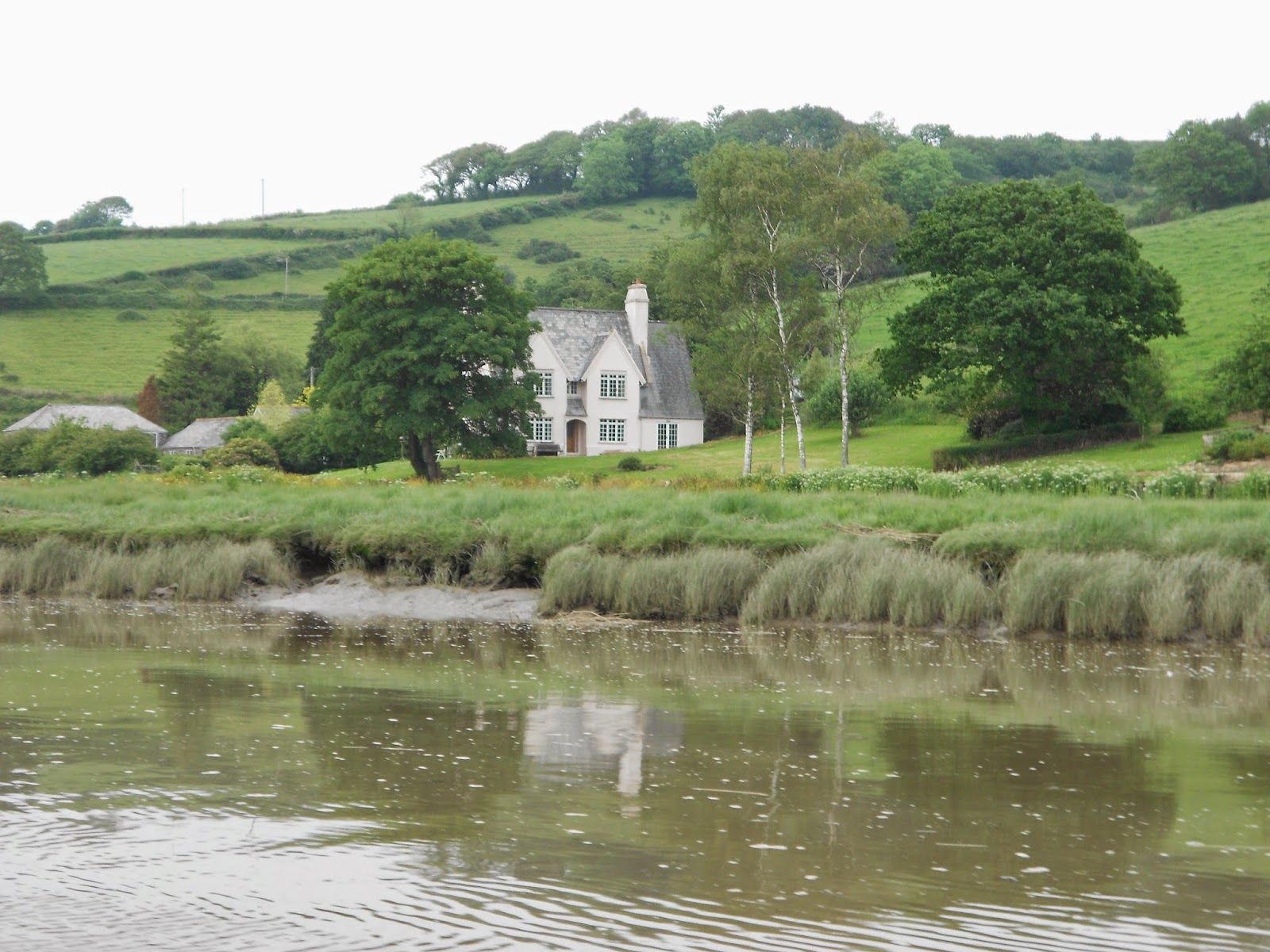
Between the reed beds we glimpse
houses, exquisite cottages. What an amazing place to live. All this nature and
scenery on your doorstep; it’s another world. Sadly I know little of it which
is shameful given it is on my doorstep figuratively speaking!
We depart
QAB on the falling tide, using the north slip with the permission of the marina
yardies. Arwen is packed. All the front cockpit is filled with three waterproof
expedition bags; one with sleeping gear and spare clothing; one with food and
cooking equipment; the last with tent materials. The clouds are an ominous
grey, low, and very wet looking. But my foulies are on, including waterproof
trousers and we are ready for anything.
This is my
75th trip in Arwen, our three hundredth hour will be clocked up on his voyage.
The calm before the storm?
Out into
Jennycliffe Bay we motor and sails are raised. It becomes clear it will be
breezy, some violent gusts but Arwen and I potter about getting a feel for the
conditions. We are under mizzen and main only. The sprit boom has been raised
to a new position to see if we can eliminate the ‘dreaded crease’. The luff of
the sail has been pulled in closer to the mast by using some rope.
More of Kevin Stares videos can be found on his YouTube channel at
We run
through some basics, coming into the wind, where Arwen, with her mizzen sheeted
in hard sits facing the wind. She never deviates, sails flap along the
centreline. She behaves impeccably. With jib out we carry out some heaving too
and again she behaves as she should.And
then we potter off to see the submarine anchored in the lee of the breakwater.
But getting too close is clearly not being allowed and so our thoughts turn to
the expedition.
Under main
and mizzen, we head up north west into the mouth of the Tamar, via the bridges
at the western end of Drakes Island. The wind is astern and the gusts have us
surfing on occasions. It feels both exhilarating and terrifying at the same
time; a sort of mildly out of control!
I think this is 'Double de Ginn', a postboat based at QAB
It's going
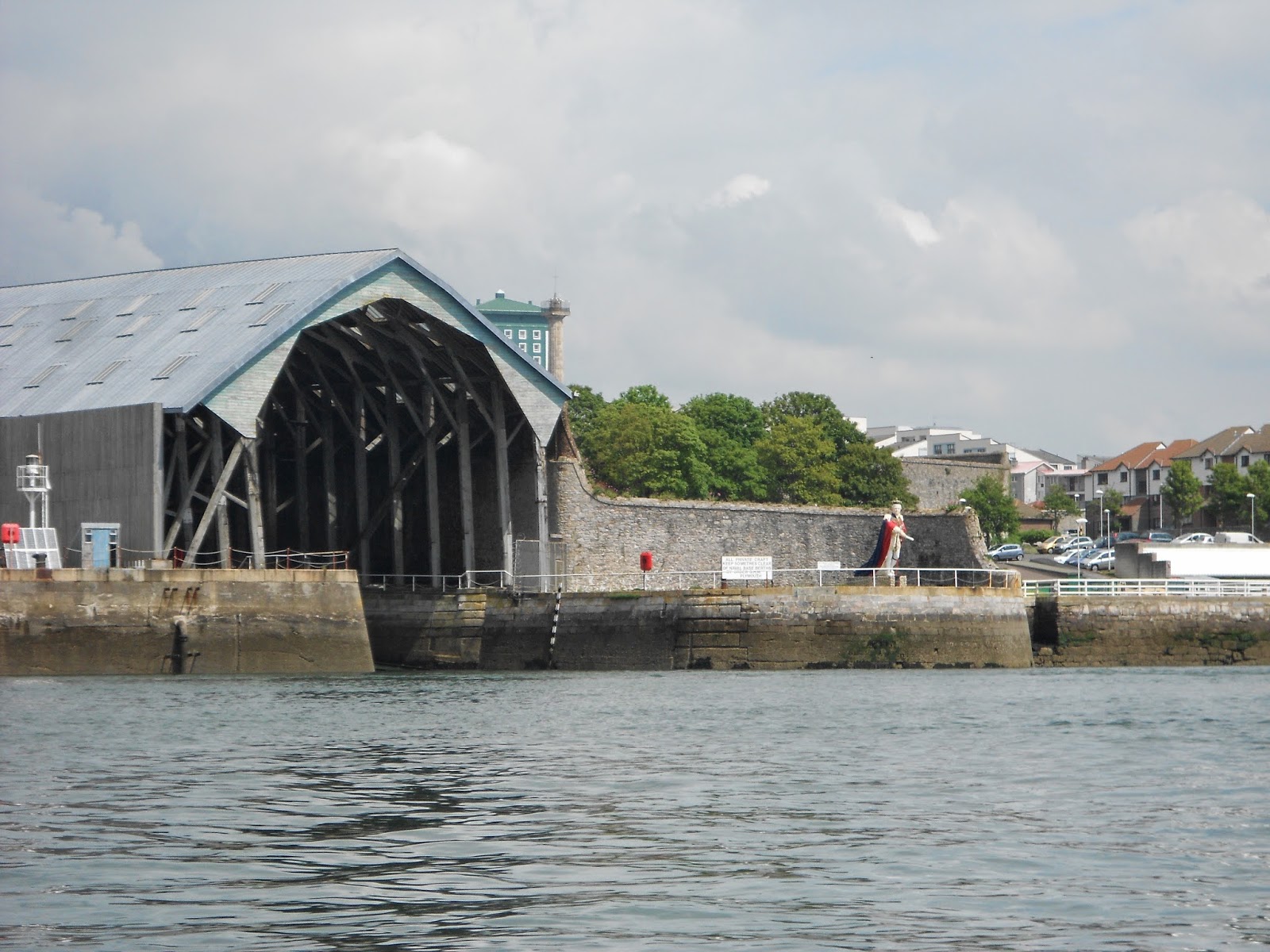
well. We make around four knots shooting the narrows between Cremyll Battery
and Devils Point. Up past King Billy and number one shed of the old dockyards,
the aft wind drives us forward towards Torpoint and then suddenly the winds
shift, northerly straight down the channel. Caught in an eddy we claw
helplessly westwards towards the mudflats. Huge gusts ferociously fill the
sail; no time for heave too; no time to reef. Out comes the jib. We tack just
in time and head south back down the channel putting distance between us and
the accursed mudflats. Many a fine ship has ended her days on Millbrook Lake
mudflats but not us. Not this day! With a gunnel and rubbing strake leaning in
the water we career down the Hamoze to open water and we tack around once more.
The jib is furled, the mizzen eased further and the mainsail eased out. We've
achieve a beam reach which takes us through the Torpoint ferries path and past
the moored tanker. The mouth of the Lynher beckons.
Being overtaken by a rowing boat...ah the pain and humiliation
sailing past 'King billy' and the number one yard shed
and up past the dockyards
And we safely negotiate the three Torpoint ferries whilst under sail power!
We sail as
far as the bridges. After that the wind drops and the channel narrows
considerably. The tide hasn’t started to push up river yet and with the wind
shifting to NNE it’s going to be hard work trying to tack up a narrow channel
which runs north. We are pinching way to close to the wind to make progress.
The sails come down and now it’s by motor. Up to Cargreen following the
starboard and port buoys carefully. The left hand mudflats extend outwards some
distance from the shore. Whilst the tide is rising, it still wouldn’t be fun to
get stuck on them. For our first trip up the Tamar, caution is the watch word.
Next time we will sail as far as we can, because then we will have ‘knowledge’
of the channel and its vagaries.
Past Weir
Quay boat yard, you enter the first of the meanders. This one is massive. The
river almost bends back on itself. The pilotage notes are really clear. Hug the
outside channel where the deep water is!
I have been
planning this voyage up the Tamar so many times in my head over the last year.
I have sailed up to the bridges before and just beyond but from Cargreen
onwards was a mystery to me. The unexpected!
As I write
this I am on my mooring at Calstock. Mid-stream in a gently flowing river, it
idles by, the odd parcel of driftwood and flotsam being delivered alongside
Arwen's hull. The bank sides reverberate to the sounds of bird song. Swans call
to each other in the dwindling light. Noise from the village pub, a hundred
yards upstream drifts down.The laughter
of young and old, of excited dogs and even more excited teenagers. It doesn't
disturb me. On the contrary it is the sound scape of tranquillity, a rural
idle.
The Calstock Boatyard
Looking up river towards the main village and its viaduct
The sound of
paddles against wood comes from astern. An open canoe with two people is slowly
making its way upstream with barely a ripple.What a great way to reach your local! Ducks make for the reed beds
either side, a rapid series of panicked splashes. The canoeists live on the
corner of the river and paddle up because some evenings the river seems so
inviting. I get their drift.....ha an unintentional pun!
The smoke
from bbq's rises vertically and hangs in the air. Someone has a radio blasting
lively pop music.......now that's slightly intrusive but hey it's their place
and a five year old is bopping in her garden. She’s happy and so who am I to
complain. Just going with the flow, the slow flow of the mighty Tamar! The
swans pay us a visit. They get very hissy when I run out of granary rolls. No
pleasing some creatures! They only got half a roll anyway; too much is bad for
them.
Temporarily moored alongside the quay
The boat yard with kitchen and shower/toilet block on the left
I loved this little boatyard. I never got to meet the owners, arriving too late and departing too early. My mooring fee of £10.00 got shoved under the office door. But having wandered around the yard whilst tea was cooking, I got a sense of well cared for yard, a variety of boats, an orderly and simplicity and charm.
The tent is
put up. A white tarp with bungee cord along its hems, it attaches to hooks
under the lower rubbing strake. It's voluminous and windage would be a problem
on an open mooring nearer the sea. But here in the shelter of the deep valley
it's fine. I use large boat building plastic clamps to tighten up the sides and
hold it to the rope slung between masts. The ends of the clamps rest on top of
the furled sails boom. Surprisingly it
works. Tent sides don't touch my head and the white gives plenty of internal
light. I can almost stand fully upright which is a huge bonus thanks to the
home made boom crutch. The new sleeping board across one half of the rear
cockpit is put in place and works, well almost. One corner crunches and brakes
off as my abundant weight kneels on it. Oops!
Tea is cooked
onshore sat at a picnic table in the boatyard surrounded by boats in various
states of repair or neglect, depending on your viewpoint. The view across the
river is stunning. The massive viaduct
to the left and open fields and a small farm across the river. Arwen is moored
to a small pontoon accessible for around two hours either side of high spring
tide. The stove, my beloved trangia, hisses as water for tea is boiled. River
life passes by.....a party of first time open canoeists with the Tamar Canoe Company.......lots
of smiling faces. Swans, ducks, moorhens follow. A party of four experienced
sailors motor to their moored yacht and return with wine and whiskey and sit
onthe banks chatting about past voyages
and the recent success of UKIP in the European Parliament elections. Not that I
am earwigging......sound carries!
'My' picnic table with stunning views and tranquility
Tea - potato and leek soup, followed by pasta and ham in a sauce with fruit and custard to follow; accompanied by mugs of steaming tea and some crackers and cheese at the end...for those who wanted to know!
All of it packs into the plastic crate which goes inside a large waterproof expedition bag; which sits on the floor in the forward port section of the cockpit; held in place by floor mounted bungee cords
The Tamar river forms most of the border
between Devon and Cornwall and is a world heritage site, famed for its historic
mining heritage. Historically, it’s mentioned by Ptolemy in the second century.
Apparently the word Tamar, means ‘great water’. The
Tamar's source is less than 6 km (3.7 miles) from the north Cornish
coast, but it flows southward. A geological peculiarity caused by the
topography of the region. However, as dusk descends, and I ready for bed, I
prefer to reflect on the non-geological reasoning for its existence, the ‘legend
of Tamara’.
Tamara was a sea nymph of
stunning beauty who lived in the underworld but like all young people, yearned
to wander freely in the mortal world; against the advice of her parents!One day, having sneaked away to wander freely
on Dartmoor, she happened on two twins, the giants Tavy and Torridge.
Obviously, both immediately fell in love with Tamara and competed for her
affections. Like all young girls, Tamara led them a merry dance, always darting
out of reach when they came too close, never allowing them to touch her. When her father, out looking
for her caught up with them all he flew into a terrible rage as all caring
fathers are wont to do. He put a spell on Tavy and Torridge, sending them both
into a deep sleep. Incensed, Tamara refused to return to the underworld and so
even more enraged, her father cast a spell on her, turning her into a bubbling
spring, which went on to produce the Tamar river. On awakening and finding his
beloved Tamara turned in to a river, Torridge sought the advice of a magician,
who turned him into a river….the river Torridge. Any hope Torridge had of
reuniting with his Tamara (Tamar) was dashed, for he was never able to find her.
Instead, he turned north, running down to the sea in the Bristol Channel, where
he is still said to this day, to mourn his beloved Tamara.
And so this explains why only
500m separates the two river springs, yet one flows north and the other flows
south for eternity. But what of the Tavy, I hear
you call? Well the other giant, Tavy, also woke in despair to find his beloved
Tamara gone. Calling on his father, also a powerful magician, he too was turned
into a river.He set off across the
landscape searching and searching for Tamara and eventually he found her. They merged
together to form one of the most stunning, beautiful and wide river estuaries
in the south west. Ah!
Some pictures to start with and more to follow over next week or so. This blog serves as an on line diary of our voyages together, Arwen and me.
This was our 75th outing and three hundredth hour sailing together. It was rather fun!
the face of a man who has no idea what he's getting into!
Our journey took us from Jennycliffe Bay and Drakes Island in Plymouth Sound, up the Tamar as far as the mighty viaduct at Calstock and back down again. The tides were morning high water springs around 8 - 8.45 am and afternoon high tides around similar times - perfect for going up on the incoming tide and going down on the outgoing tide. Winds were gusty on day one from east giving us a perfect beam reach up as far as the Tamar bridges. Winds were non existent on day two and so we motored gently back down river at around 3 knots, a perfect speed to chill and appreciate the landscape and wildlife.
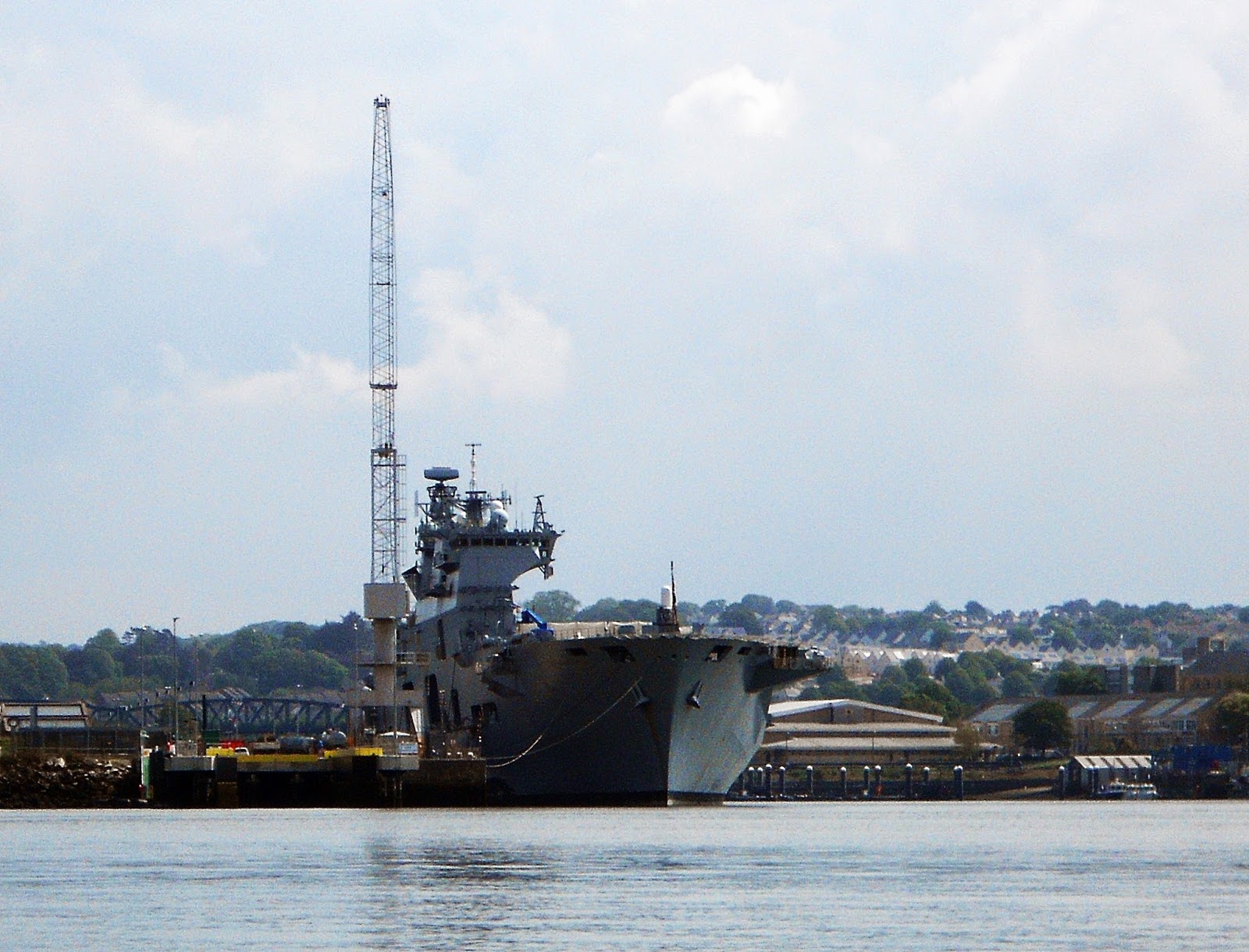
Up past the mighty ships at Devonport Dockyard
Into another world of tidal river
the home of canoeists, kayakers and rowers
of sweeping broad meanders, valley slopes and farming land
I'd heard tales of mythical vineyards and orchards in the tamar valley
here is the proof they exist
Negotiating the river channel; one eye on the charts; one eye on the ever changing channel flows
Deep water on the outside of bends; mudflats on the inside....and watch out for half submerged trees!
Up past Haldon Quay with the small church in the UK on its edge
Having a break at Cotehele House and Quay
In the background is the old Tamar sailing barge, Shamrock.
The final approach to Calstock and its mighty viaduct for the railway line
Looking towards the Calstock Boatyard from our mooring mid channel
Arwen’s Meanderings is my long‑running blog about dinghy cruising around the rivers and coastal waters of the South West. For many years I’ve explored these shores in my home‑built Welsford designed ‘navigator’ dinghy - sharing trip reports, coastal passages and the realities of camping aboard a small open boat.
I also focus on maintaining, modifying, and adapting a small cruising dinghy for comfort and safety — from rigging tweaks and storage solutions to onboard camping systems, reboarding aids and practical seamanship.
Alongside the YouTube channel ‘Arwens Meanderings – Plymouthwelshboy’ this blog is a resource for anyone interested in small‑boat cruising, DIY boat improvements, and quiet exploration under sail.
Maurice Griffiths and His ‘Eventide’ Yacht
-
*'Ishani'*
Many yachtsmen will have affectionate memories of sailing and owning boats
that were designed by Maurice Griffiths, and perhaps thousands...
Weston Open Day
-
Slightly late posting of the bank holiday open day at Weston SC, although
the heavy rain on Saturday wasn't repeated winds were forecast at 15 -24
knots ...
The America's Cup in Barcelona
-
I haven't posted for a long time, but it's blog anniversary day and I've
recently been in Barcelona where managed to see the America's Cup, so
thought...
Wandering on wheels
-
Some years ago, after a short illness, I wrote a song called ‘I haven’t
finished yet’. It’s about dying – or rather, not-dying, a bucket-list song,
a plea ...
FOR SALE
-
Sailing Just For Fun: Rare opportunity to own wooden gaff cutter Shoal
Waters. Owner retiring. New sails. Yard trailer. Spare original sails.
Ghoster sail....
Moving this blog to Wordpress, Nov 2014
-
I am going to continue this blog on a new *Wordpress *site. I have got
tired of the restrictions and changes that occur to the image library here
on Blogsp...
Capsize
-
I capsized last week for the first time. Ever.
Those who have been here for a while will recognize the eighteen foot long
*Saga*, a design based on the ...
Removing Butyl Tape: Suggestions?
-
*Gardens'* CB case leaks a fair bit when sailing to windward. The case has
three parts: the main trunk; a 'box' (housing the CB uphaul rigging); and a
'c...
CNC files for Welsford Tread Lightly - FREE
-
*NOTE: These CNC files have been updated to add planks and correct
errors. If you have previously downloaded these, please re-download
Revision "A".*
...
WEBSITE INTENTIONS
-
Now I have learned how to access and add to the site, I’ll be posting here
on a regular basis, the intention is to put build blogs, some tips and
hints, ...
New Stretcher - Old Stretcher
-
In rowing there are different definitions of the word 'stretcher,' but this
one seems to work for PicoMicroYacht.
*Stretcher: Also known as the foot stre...
Slack Water Alice.
-
Its been a long time coming.
Designed over ten years ago as a simple two sheet canoe but never built due
to "life" and a lack of confidence, she's final...
Helming a Boat
-
Steering the boat is called helming and the person doing this is called the
‘Helm’ or ‘Helmsman’. You steer by easing the tiller away or pulling it
towar...
Themed Issues —by Joshua Colvin
-
This might come as a surprise to some of you, but the selection of articles
in each of our issues is more-or-less coincidental. Any apparent “theme” is
mos...
day seven - fog, a friend and Freya
-
Wake at 5:00 to thick, thick fog. Only two sounds are water lapping
against SPARTINA's wooden hull and the muffled cries of eagles in the
trees. The o...
 The 45th edition of La Solitaire du Figaro arrived around 4pm. A tough race, it is considered to be the world championships for single-handed yachtsmen and women, one of the main training grounds for the famous Vendee Globe.